
VAT Returns.
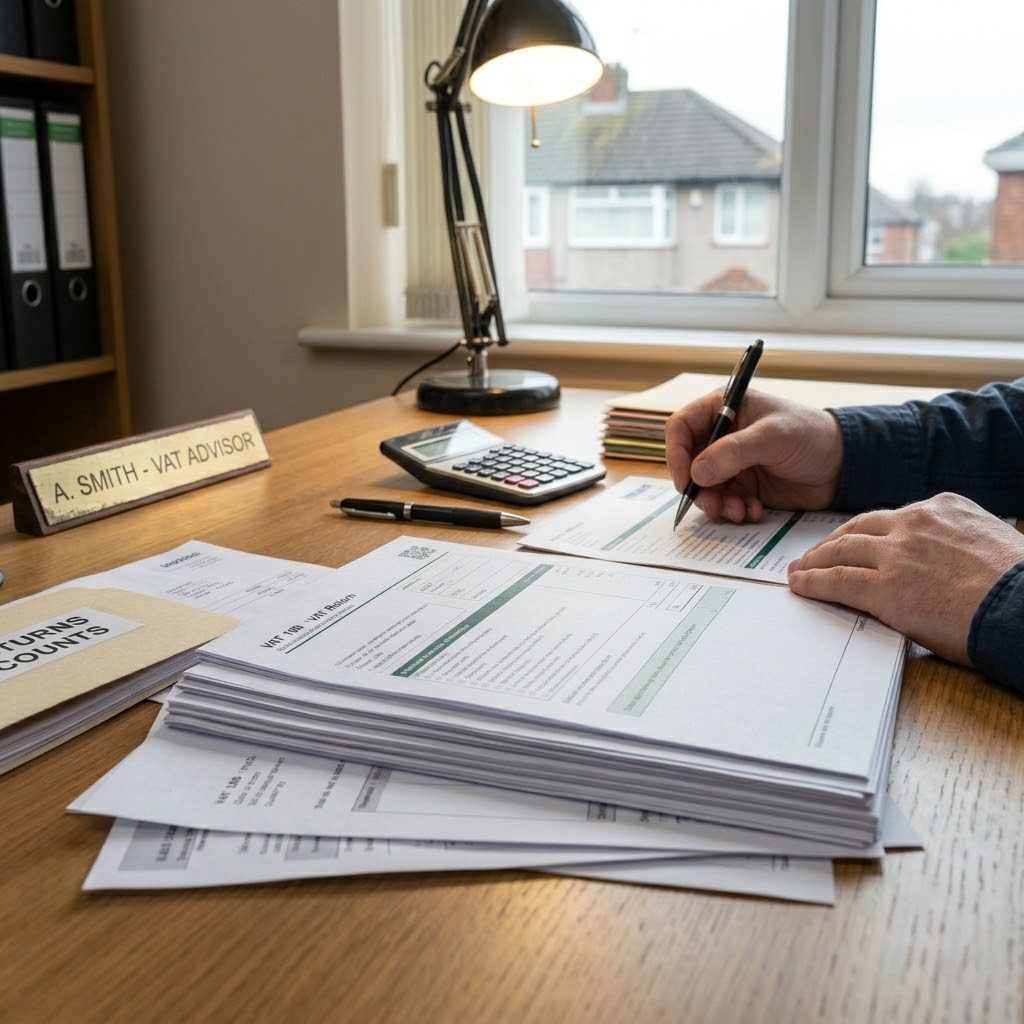
I know that VAT can feel like a bit of a mountain to climb, but my goal is to help you reach the summit without the stress. Whether you are a local shop in the city centre or a growing service business in the Ribble Valley, I am here to make sure your records are spot on and your submissions are seamless.
To get us started on the right track, could you tell me a little more about your current setup?
Which VAT scheme are you using? (e.g., Standard/Accrual, Cash Accounting, or the Flat Rate Scheme)
What is the VAT period we are looking at? (e.g., your quarterly end date)
Do you have your sales and purchase records ready? (Whether they are in software like Freeagent, Xero or a spreadsheet)
The Road Map to Your VAT Return.
Once I have those details, I will guide you through the process step-by-step. Here is a high-level look at how we will tackle it together:
1. Identifying Your Output Tax (What you owe) We will look at your total “taxable turnover.” This isn’t just your profit; it’s the total of all your VAT-applicable sales. We’ll make sure you’ve applied the correct rates (20%, 5%, or 0%) so you aren’t overpaying or under-declaring.
2. Calculating Your Input Tax (What you reclaim) This is the part most business owners like! We will identify the VAT you’ve paid on valid business expenses—from stock and equipment to utility bills. We’ll also double-check that you have the proper VAT receipts to back these claims up.
3. Navigating the “Grey Areas” VAT isn’t always straightforward. Some things are exempt (like some insurance or education), some are zero-rated (like most books or children’s clothes), and others are outside the scope (like dividends or most grants). Getting these in the wrong box is a common mistake that can trigger a letter from HMRC, but I can help you categorise them correctly.
4. Completing the Nine Boxes We will walk through the formal VAT return together:
Boxes 1-5: The “Money” boxes—calculating the net VAT to pay or be refunded.
Boxes 6-9: The “Statistical” boxes—reporting your total sales and purchases (excluding the VAT).
5. Avoiding Common Pitfalls HMRC looks for patterns and inconsistencies. I will look out for common errors like claiming VAT on motor cars (usually a no-go), entertainment expenses, or missing the distinction between a “Pro-forma” invoice and a “VAT” invoice.
If things start to feel a bit too complex or if you just want the peace of mind that a professional has given it the green light, I am always happy to help.
I’m proud to support the Preston business community, and you’re more than welcome to get in touch with Owen McGough at McGough Bookkeeping for a more personalised, hands-on service.
How would you like to begin? Tell me a bit about your scheme and your records, and we can dive into the details!